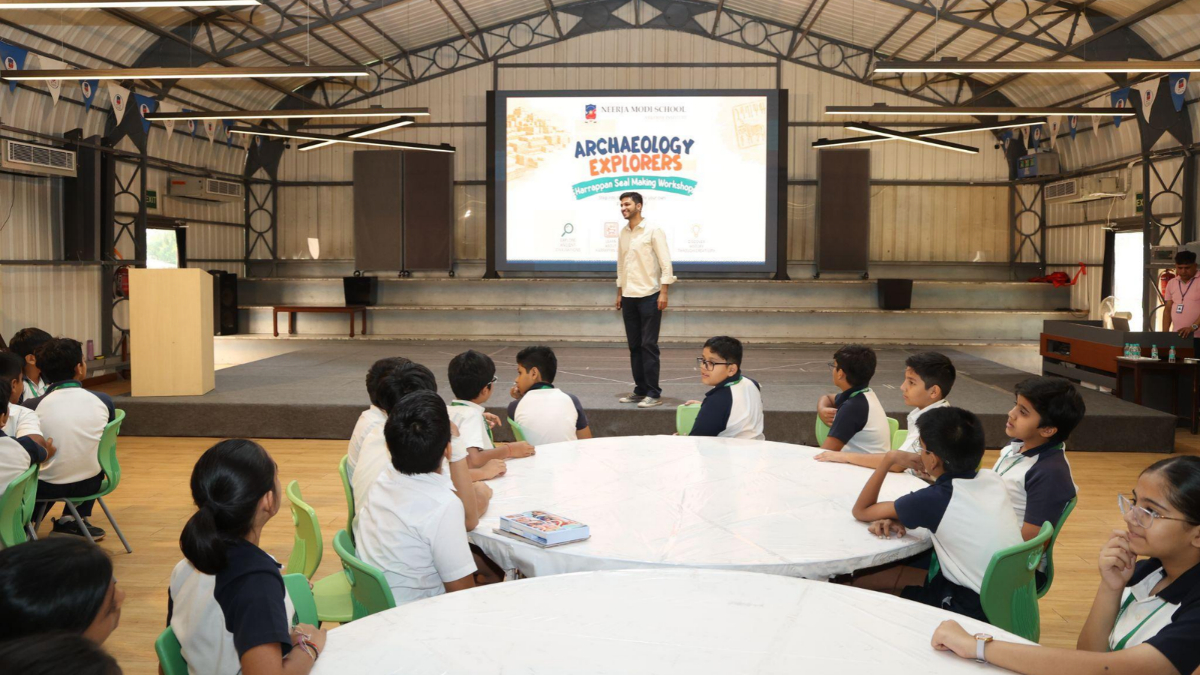
Jaipur (Rajasthan) [India], October 16: Students of Neerja Modi School, Jaipur, explored the world of the ancient Indus Valley Civilization through a hands-on archaeology workshop that combined historical learning with creative expression. Titled Archaeology Explorers, the two-day Harappan Seal Replica Making Workshop was conducted on October 5 and 6, 2026, for Grade 6 students, introducing them to the artistic traditions, symbols and cultural heritage of the Harappan Civilization.
The workshop offered students an opportunity to move beyond conventional classroom learning and engage directly with an important aspect of ancient Indian history. By creating replicas of Harappan seals, students explored how archaeological objects can provide insights into the social, cultural and economic life of one of the world’s earliest urban civilizations.
Neerja Modi School Introduces Students to Experiential History Learning
The workshop was conducted by Mr. Pranshu Soni of Ethereal Circuit, a Jaipur-based experiential heritage organization and eco-cultural tourism agency. Through guided instruction and practical activities, students were introduced to the historical significance of Harappan seals and their role in understanding the civilization’s material culture.
The sessions began with a 20-minute orientation and presentation on the Harappan Civilization, which flourished approximately between 2600 BCE and 1900 BCE during its Mature Harappan phase. The presentation covered the civilization’s urban planning, baked-brick architecture, public sanitation systems, seal-making traditions and distinctive iconography.
Students learned how archaeological discoveries, including seals and other artefacts, help researchers study the practices and achievements of ancient societies. The session also introduced them to the motifs and symbols found on Harappan seals, encouraging them to look at historical objects as sources of information rather than simply remnants of the past.
Students Create Harappan Seal Replicas Using Traditional Motifs
A key highlight of the Archaeology Explorers workshop was the opportunity for students to create their own Harappan seal replicas. After the introductory session, participants selected motifs inspired by authentic Harappan artefacts, including the unicorn-like animal commonly depicted on seals, the humped bull and symbols associated with the Harappan script.
These motifs provided students with a glimpse into the visual language of the civilization. Although the precise meanings of many Harappan symbols remain uncertain, their repeated appearance on seals makes them an important subject of archaeological research.
Artist resource persons demonstrated the techniques involved in carving seal designs, guiding students through the process of translating selected motifs into clay replicas. The demonstrations helped participants understand the patience, attention to detail and precision required to create intricate designs on a small surface.
The students then took part in a 70-minute hands-on carving activity. With individual guidance from the artist resource persons, each participant worked on a seal replica, learning to shape the clay and carefully reproduce the chosen design.

Hands-On Archaeology Connects Classroom Learning With Creativity
The practical component of the workshop encouraged students to engage with history through observation, experimentation and artistic expression. Instead of only reading about ancient artefacts, they experienced the process of recreating one, gaining a more tangible understanding of the craftsmanship associated with Harappan seals.
At the end of each session, students pressed their completed seals to produce impressions of their designs. They also completed worksheets that reinforced their understanding of the activity and the historical concepts introduced during the presentation.
This combination of historical context, artistic demonstration and hands-on participation gave students an opportunity to connect classroom knowledge with a practical learning experience. It also encouraged them to observe historical motifs closely, follow a creative process and appreciate the role of artefacts in reconstructing the past.
Neerja Modi School Students Take Home Their Own Historical Creations
The two-day workshop concluded with each student taking home a Harappan seal replica created during the activity. The finished pieces represented the students’ individual interpretations of the motifs and designs they had explored throughout the sessions.
By combining archaeology with creative practice, the Archaeology Explorers workshop brought an important chapter of ancient Indian history closer to young learners. It provided Grade 6 students with an opportunity to explore the Harappan Civilization in a format that encouraged curiosity, participation, and a deeper appreciation of cultural heritage.
For Neerja Modi School, Jaipur, the workshop offered students an engaging way to explore history beyond textbooks, turning the study of an ancient civilization into a memorable, hands-on experience. Through their clay creations, students were able to connect with a heritage that dates back thousands of years while developing a greater appreciation for the archaeological discoveries that continue to inform our understanding of the past.
If you object to the content of this press release, please notify us at [email protected]. We will respond and rectify the situation within 24 hours.